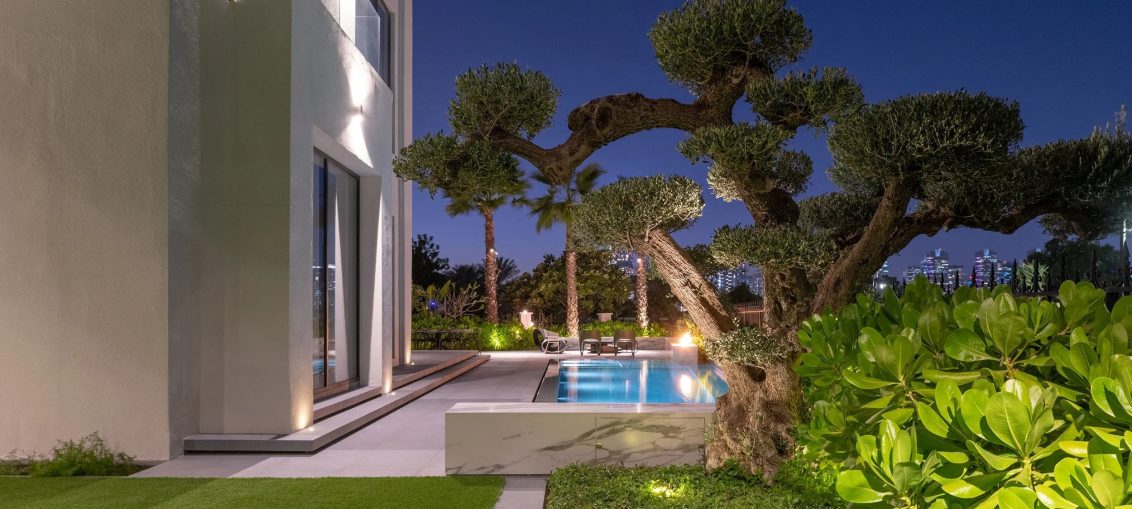
Lighting can make or break a space. In a villa. It shapes the way each area feels, draws attention to stunning architectural details, and sets the tone for everyday living. Get it right, and even the simplest corner can feel like it was pulled straight from an interior design magazine.
In this guide, we’ll walk you through practical ways to use lighting to define the spaces in your villa. From carving out a snug reading nook to making your grand staircase the focal point it deserves to be, these tips will help you create a stunning villa lighting design.
Layer your sources:
One overhead light leaves a room flat and uninviting. Combine ambient, task, and accent fixtures to give depth to every area. Ambient sources offer general glow, task lights support reading or cooking, and accent beams highlight art or textures. This trio works together to separate a dining space from a living zone without building walls.
Use dimmers for flexible zones:
Fixed brightness locks a room into one role, but dimmers allow change throughout the day. Lower the intensity in the evening to create a calm sitting area, or increase it during family meals for a lively atmosphere. This simple control helps define spaces according to the time and activity. Dimmed lights soften edges between zones, while bright settings sharpen the boundaries. A dining table can become a workspace in the morning and a romantic dinner spot at night.
Highlight vertical surfaces:
Walls carry light differently than floors, so washing them with illumination expands the perceived size of a room. Place fixtures to graze textured stone or wooden panels, drawing attention upward and outward. This technique separates a hallway from an adjoining living space by giving each wall a unique glow. Vertical light also reduces harsh shadows that confuse the eye, making every corner feel distinct. Tall ceilings benefit greatly from this method, as it adds warmth without clutter.
Create pools of light:
Scattered pools of brightness define specific functions within a large open area. A pendant over a desk signals a work zone, while a floor lamp beside a sofa marks a reading nook. These illuminated islands guide the eye and tell the brain where to stop and what to do. Leaving gaps of lower light between these pools keeps the spaces from blending into one another. This natural segmentation works beautifully in great rooms that host multiple activities.
